Cannabis and Purple Genetics: They Not Like Us
By Leo F. Mega
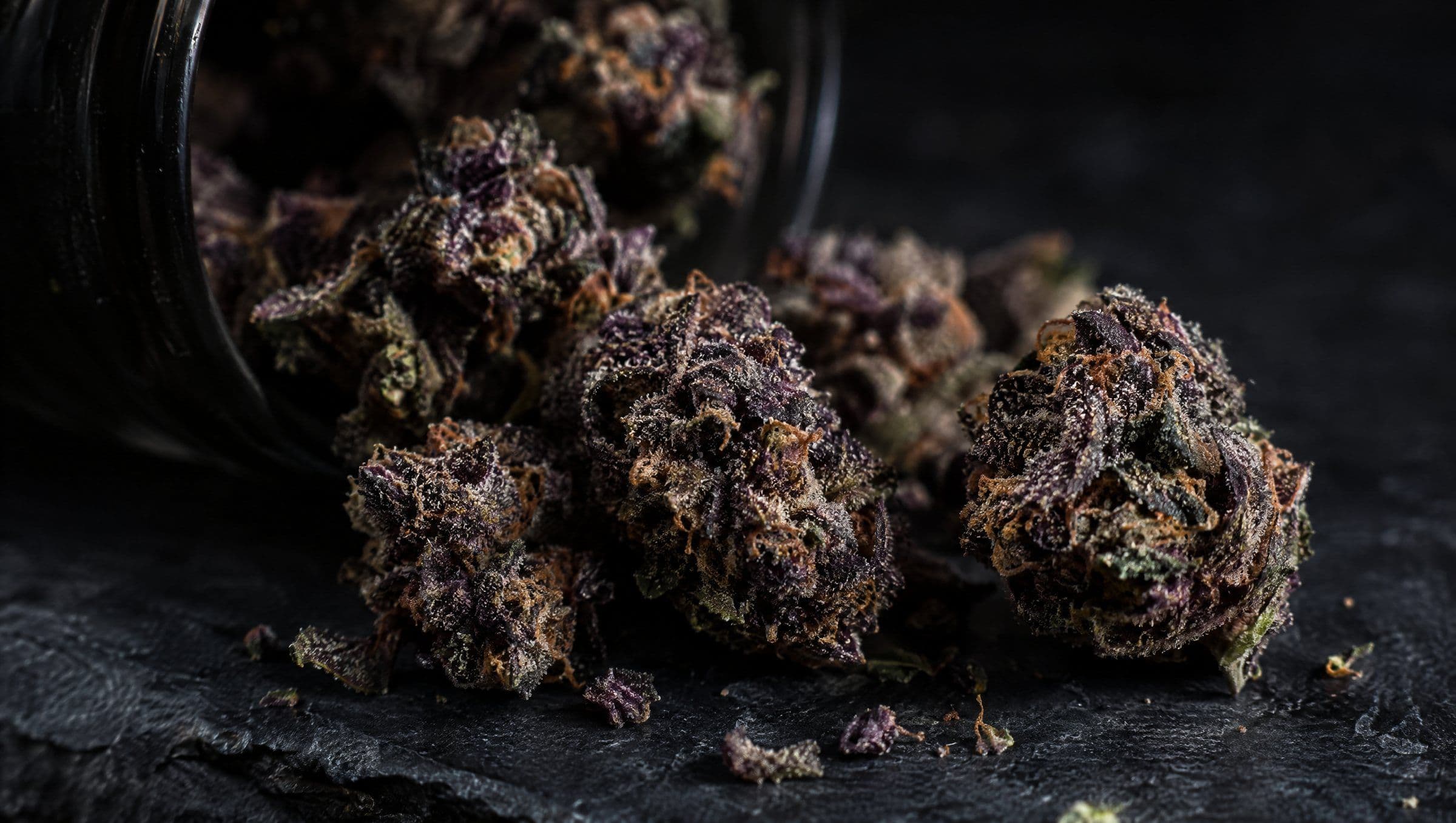
The first few minutes of opening a new mylar bag filled with purple smalls has got to be on the top ten stairs on the stairway to heaven. If you don’t believe in stairways or in heavens, chances are the genetics of purple cannabis could get you close.
Why Is Cannabis Purple (Sometimes)?
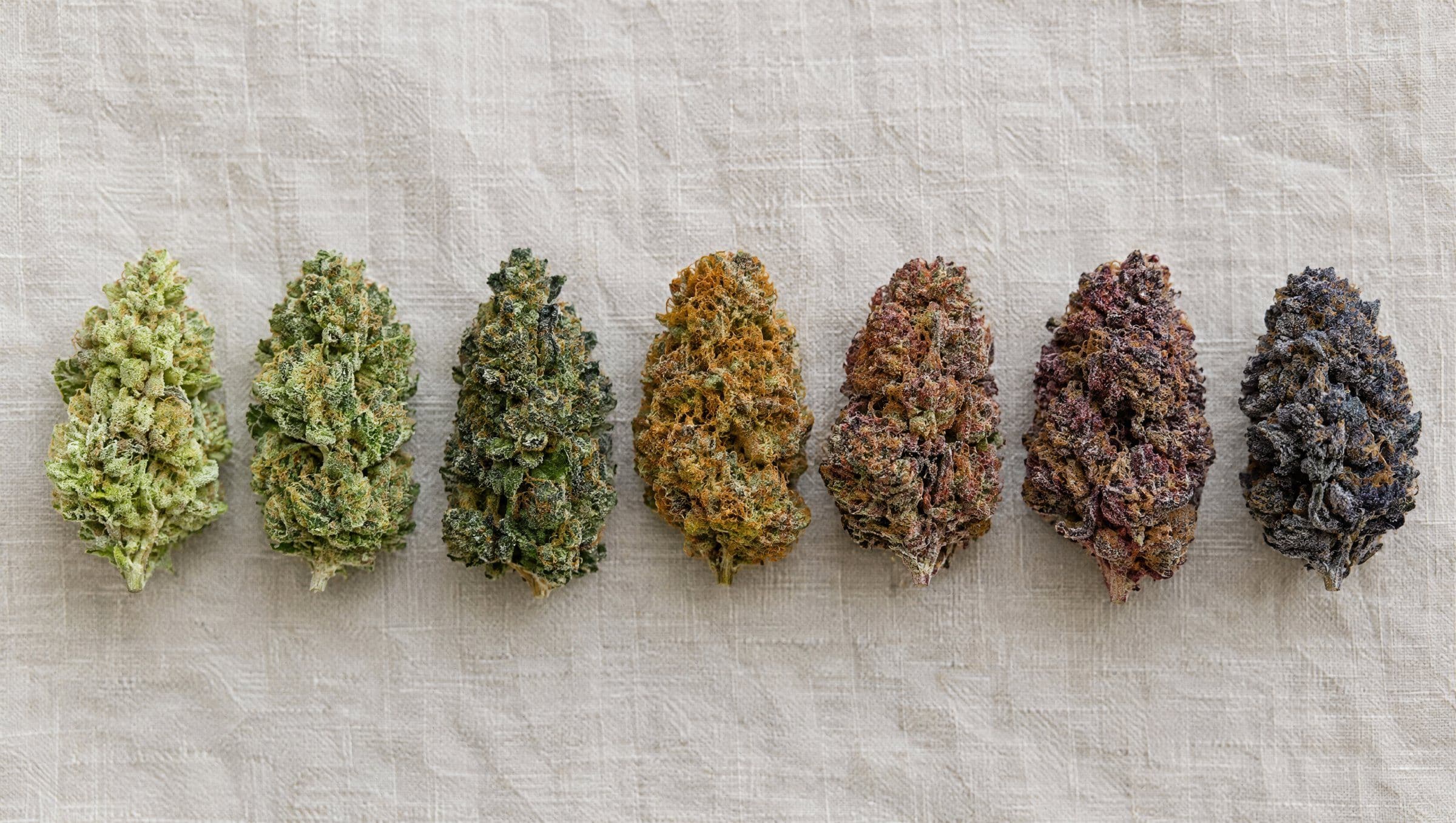
Since cannabis cultivation mobilized into industry, less informed consumers are often convinced, by state-funded dispensaries, that cannabis with purple trichomes or purple hues, are generally higher in Tetrahydrocannabinol (THC) content, offering a more lifted high. For cannabis researchers and recreational connoisseurs, this proof is easy to dispute.
The THC content of a particular cultivar is but one byproduct of the group known as Entourage Effect. The hypothesis of the entourage effect is that various cannabis compounds decide to join together for the higher good, responsible for the overall experience of consumption. THC is but one chemical compound in a sea of complex plant life, founded by cannabis genetics.
Anthocyanins
Anthocyanins are the group of antioxidants responsible for the purple hue in plant tissue and plant matter. Visit the produce section of the grocery store and witness the world awash in Anthocyanins (and tryptamines!) for our anthropomorphic mandates, our flesh food.
Blueberries, elderberries, cherries, strawberries—these fruits all a genetic lineage that includes anthocyanins. Likewise, Anthocyanins are responsible for the purple hue hidden in the hearts of your cannabis flower.
Are You OK, Cannabis? You’ve Barely Touched Your Gene Expression, Bud
Genetic lineage is wholly natural and default, and effortful. Purple appears in cannabis flowers and trichomes when a very specific nutrient introduction of nitrogen, phosphorus, and nitrogen is absorbed by the plant, producing the praised colored cultivar, cash cow of the headshops.
The mechanics of cannabis gene expression is not a direct ticket to cultivar traits, however. It is an understanding and acknowledgement of nuance within the tissue of the plant life, generally.
Purple cultivars are quite common as many cannabis farmers have the resources and nutrient tech to hit the ideal nutrient apex like a predictable science. However, if your cannabis is not purple, don’t fret. Purple is not the sole indicator of flower health, nor of efficacy of entourage effect.
Combating General Cannabis Myths: A Simple Strategy
Cannabis is (again) stepping into the spotlight as the country rearranges regulations around its agricultural presence. There are many ways to stay misinformed amidst the myths of cannabis stigma. When it comes to cannabis consumption, follow the strategy below to still ensure a good experience, purple or not.
- Trust your curiosity: ask questions about the cultivation and growth type to make an informed decision on what you want to purchase to consume. The more questions, the more chances to customize your consumption.
- Nose inspection: if you can smell the flower, do it. This is an intuitive way to understand the flavors and effects of your flower.
- Learn terpenes: Terpenes are a big deal in the entourage effect. Learn the names and effects of a few terpenes and you’ll see which dispensaries are worth their salt.
- Understand: never underestimate the political, historical, racial, and medical repression of cannabis in our society.