Vegetation History and Archaeobotany: How Plate Tectonics Gave Asia Cannabis
By Leo F. Mega
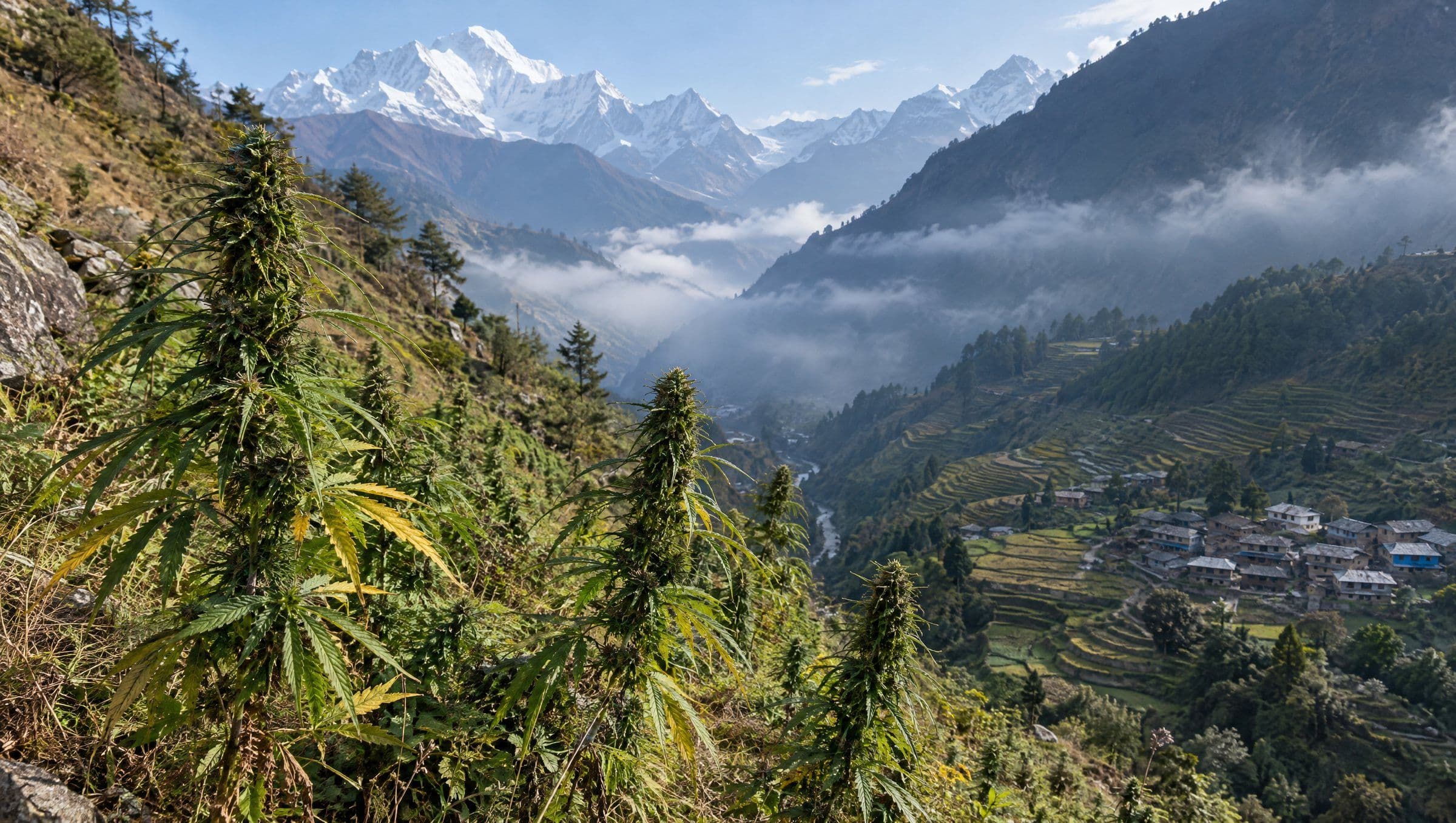
When two biomasses, both now known as India and Europe, converged in the nature-fated plate tectonic event of this human-centered eon 28 million years ago, the Tibetan Plateau appeared. The appearance of the Tibetan Plateau would go on to impact agricultural practices in an unprecedented way. The Tibetan Plateau gave way to a microclimate that allowed cannabis to grow wild on the plains of the Tibetan Plateau, most likely, as concluded by a team of student researchers at the University of Vermont, near the Qinghai Lake, the largest lake in China, classified as an alkaline salt lake.
One might ask how the ecology and living systems surrounding this salt lake, Qinghai Lake, supports an early cannabis ancestor in growth and development. Maybe most interesting and impactful on the Plateau near the Qinghai Lake (which is most likely not a lake, but Mongolian descriptives were the ruling word of the day) is that this natural entry lives at the intersection of a myriad of bird pathways. Birds are the postal system of natural kingdoms, transporting details of food ways, seeds, spawn, to germinate the world, keep biological diversity regulated, ward off soil pathogens, and mesh symbiotically with plant life. All of these characteristics are compatible with the first growth of wild cannabis.
The study of ecology is the study of the flow of all life back to each other. Nothing in nature claims to exist on its own. The Plate tectonic shift, the bird migration, and Lake Qinghai existing are all random characteristics coming together in concert to keep up with the diverse needs of an evolving planet with co-evolving systems of life.
It’s no surprise that Cannabis is first thought to have grown in a grassland since historically, grasslands have been the largest natural biome on Earth, mostly due to human cultivation efforts and the American obsession with monotonous vegetative culture although the land has capacity for much more. What does make this interesting, however, is that the Tibetan Plateau is not a human-handed work. When plate tectonics converged, Earth was in the shadow of an ice-age, and it’s unclear that Cannabis would have been able to survive the harsh conditions of one of the first ice ages on the-cene.
Nitrogen is required for all plants to develop and impacts plant metabolism and the enzymes they release into the atmosphere. As the uptake of the N molecule assimilates at the root of the plant into amino-acids to build more plant proteins and N metabolites. However, all molecules work in concert, no molecule is an island and we see that as N upon assimilation into the root system of any plant, including cannabis for this context, will attach to hydrogen or oxygen molecules to begin processes crucial to the sustainability of plant life. This process is rhizomorphic, as, at the root level, the molecules are impacted by the plant’s systems and the systems are impacted by the plant.
Peer-reviewed research often believes that the type of uptake of N will directly affect the rhizosphere differently. For example the uptake of 1 molecule of N latched onto 4 molecules of Hydrogen and then added to a Hydrogen ion (H+) results in organic acid biosynthesis and rhizosphere acidification. Alternatively, when you take away the soluble hydrogen ion from the NH ground, and replace NH(4) with NO(3), the cannabis plant undergoes alkalinization accompanied by organic acid biodegradation, further affirming the fact that microflora in the soil of plants is active and connected to the tissue of the plant and trees in xylem. Composition of soil and activity and function of soil can change the development scenario of plants. Additionally, phytoplankton may have contributed to the thriving of the cannabis plant as it produces Nitrogen.
These ecological details certainly impacted the wild growth of cannabis. It is possible that modern cannabis is more potent, and although true cannabis fanatics know that potency is but one instrument in the concerto of cannabis effects, we can trace the lineage, function, and behavior of THC molecule behavior back to 28 million years ago when India and Europe bumped into each other. These landmasses came together, pulled resources, and gave earth the first wild cannabis crop.
Today, the cannabis crop touts a million-dollar industry where, and continues to be a triple threat in the clothing, culinary, and medical drug industries. However, 28 million years ago, it was the wild Sativa plant in the middle of a newly-evolved hollow grassland with no shade. Cannabis is a drama all its own, it’s both nature-fated and human-cultivated, the off-spring of both nature in high places and humans with high intentions.