The Cannabis Rainbow Belt
By Leo F. Mega
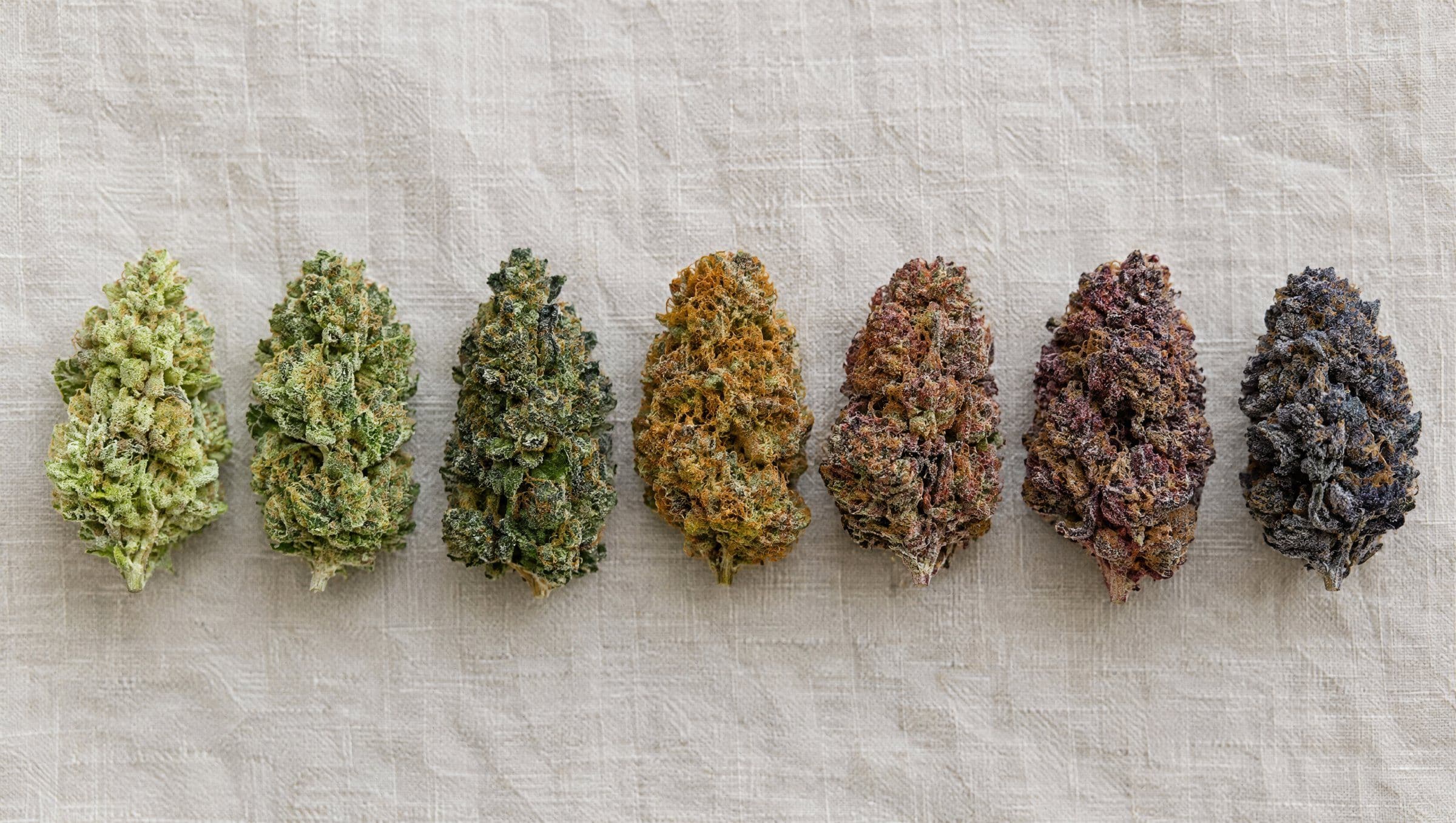
Cultivars are multi-layered with color. Choosing the strain to customize your session is important. Even if you know very little about the phytochemicals and compounds in cannabis, identifying traits by color is a skill. Cannabis colors are indicative of a few key characteristics consumers can count on to design their consumption sessions.
This era of cannabis consumption, legislation, government funding behind cannabis products has brought cannabinoid testing, which allows a significant amount of data about cultivars. Before this era of testing, however, our human and non-human ancestors found the cannabis plant in the wild, and used color (and smell) to determine its benefits. This tactic is still a useful strategy today, and is one you can always have on hand whether in a dispo or in the seat of your delivery guy’s baby blue Volkswagen.
As you know if you’ve ever visited a cannabis market where cultivars are displayed with favor to their color, cannabis strains have a spectrum of color variability and potential. It’s no surprise, as nature’s model of language is often smell, color, touch before taste.
It is important to note that these sensory strategies are not linear. Some cultivars change color as they develop from the reproductive seed and germinate toward harvest, this is due to genetics. Even further gene expression shows up in the ideal conditions it takes to develop in that color-filled way.
This is very similar to the way other plants in nature cycle through biomimicry during transition times: they change colors as they grow differently during a seasonal time. This is what happens with cannabis as it grows, too. Autoflowers do not have this trait, but cannabis genetics, otherwise, will halt its primary green hue, as the light cycle shortens and the temperatures drop their commitment, and the rainbow can shine through. Chlorophyll is inhibited when temperatures drop.
Anthocyanins
Anthocyanins give purple hue that so many consumers have high on their lists. This group of plant actives produce purple, brown, red, blue, and yellow. Anthocyanins are a group of 400 water-soluble flavonoids which prevent cancer, increase antioxidants, and reduce inflammation and the potential for Alzheimer’s. These are the flavonoids that make purple, purple in cannabis plants, also found in wine and tea products.
The color of a strain gives much data about the chemical makeup of the flower of interest. Here are more meanings of Marijuana colors.
Green
- Compound: Chlorophyll
- Arms Acres strains: Sugar Bomb, London Pound Cake, Cap Junky
Cannabis green is a vital color for the reflection of versatility, adaptability, accountable to photosynthesis for development, and optimal growth conditions. The hue of green can run the gamut: from light green to a darkest forest green. This is often due to the maturation of the plant, the strain’s genetic expression + makeup contextualized based on timing and lumens. It’s the primary hue found in cannabis strains.
Purple
- Compound: Anthocyanin
- Arms Acres strains: Strawberry Mai Tai, Joker, Tribute, Khalifa Kush
Purple cannabis is very in demand. The color tends to evoke a sense of distinction in cannabis connoisseurs of all preferences. Purple has been rumored into mythical proportions as it concerns flower. And it's easy to see why. Strains expressed as purple are typically indica-dominant and are fruity in aroma and relaxing in its effects. These characteristics and color are introduced when lower temperatures are inoculated during the flower development, triggering Anthocyanins and interrupting the flower color.
Red
- Compound: Anthocyanin
- Commercial strains: Pink Panther, Red Dragon, Red Poison
Red buds are rare genetic mutations, but with cultivation efforts increasing as states loosen up on cannabis legislation, they are beginning to come alive in the culture a bit more. Red buds are accountable to anti-inflammatory compounds, and analgesic properties. Cultivars with red hues (not just red pistils) are celebrated for their intentional combination of Ruderalis (a less-psychoactive plant) and more familiar cannabis plant structures like Sativa. A cultivar can decrease the amount of Phosphorus to attain the red buds (induced nutrient deficiency), but it will not be the same as the naturally occurring autonomous decision of the plant.
Orange
- Compound: Carotenoids
- Arms Acres strains: Double Bubble, Mac Stomper, Lemon Zerbert
This compound, Carotenoids, give yellow, gold, and orange to cannabis, pumpkins, and carrots. These colors make strains pop and are eye-attracting in many dispo displays. To achieve this color, higher alkaline conditions are in order. However, if these colors are a part of the plant's genetic expression, they will develop naturally when the temperature drops and the chlorophyll starts to dwindle. The rumor here is that yellow strains might have a higher-than-average THC content.
Black
- Compound: Anthocyanins
- Arms Acres strains: Tribute
Black cannabis is a result of Anthocyanins congregating so intensely, they turn both the bud and the trichomes black. Black cannabis has been noted for its incredible psychoactive tendencies, semi-psychedelic, and very cerebral. This inky well cannabis color comes from the pure abundance of Anthocyanin compounds and the Vietnamese genetics. These cultivars’ colors deepen with the increase of temperature, as temperatures drop during the flowering phase they allow Anthocyanins to develop vividly in the plant.